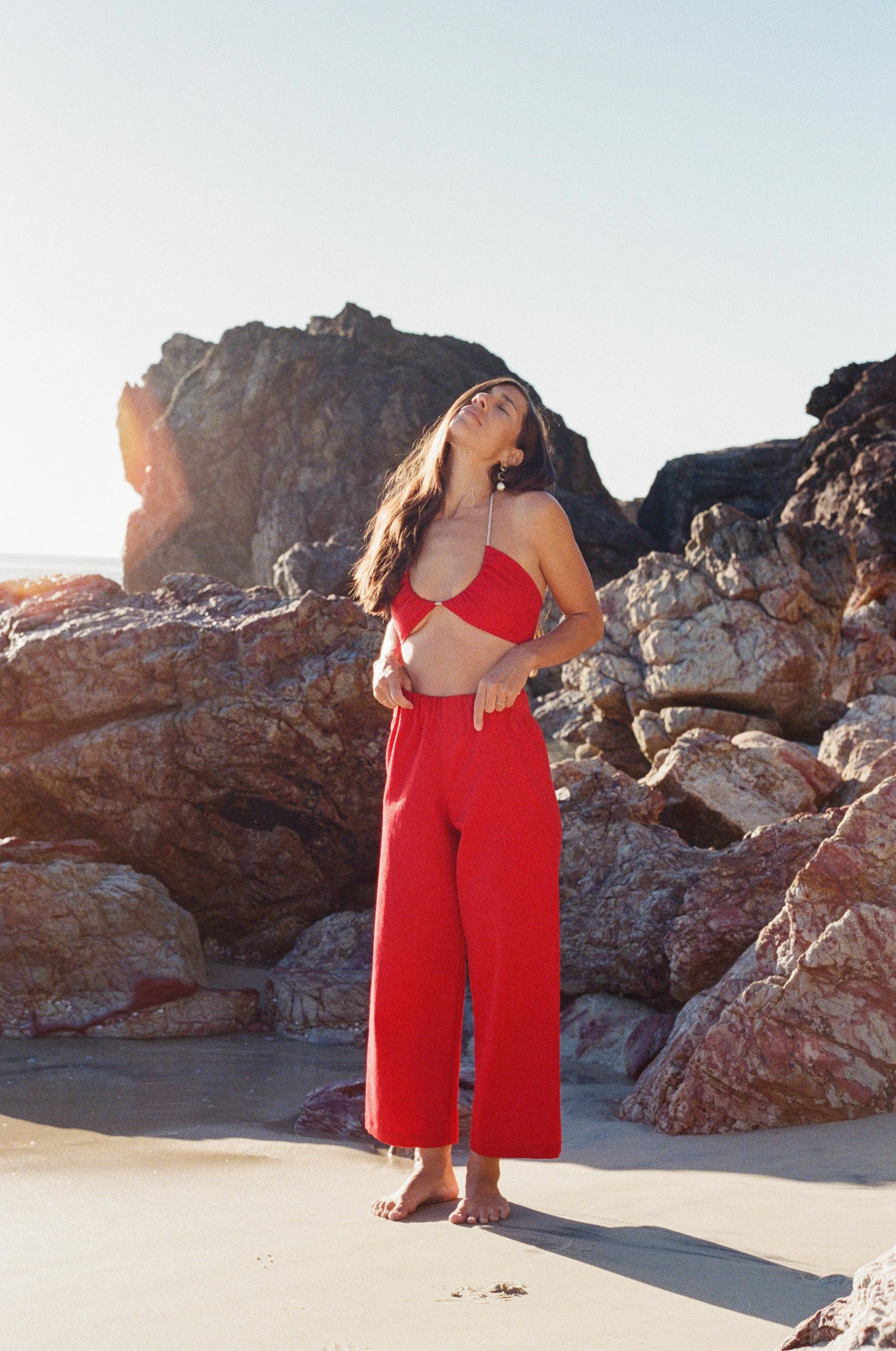
INTERVIEW with KINDER.LABEL || Brisbane Fashion Festival 2026 Designer (Hancock Prospecting Next Gen Group Show)
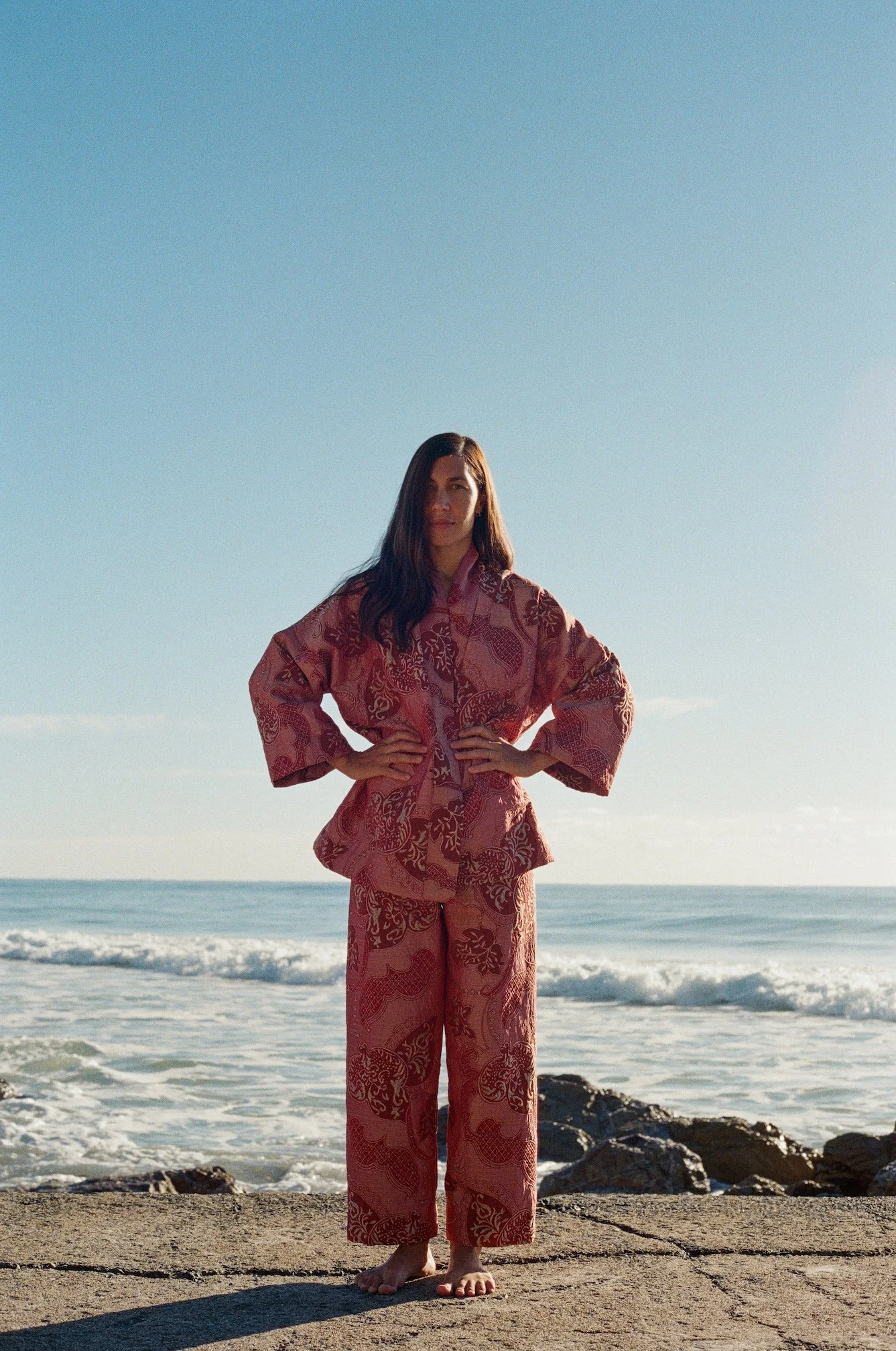
SD: Hi, Carina. For my readers who don’t know you yet, can you please introduce yourself?
CT: I'm Carina Thompson, an Austrian-born designer based on the Gold Coast and founder of KINDER.LABEL. I create one of one garments from existing materials, designing pieces that sit between everyday wear and occasion dressing.
I moved to China alone at 19, which was a formative experience that shaped my independence and perspective early on. Since then, I’ve continued to move between places and cultures, and that sense of adaptability is reflected in how I work.
Before starting KINDER.LABEL, I worked in luxury retail with Prada and Bulgari, where I developed a strong appreciation for craftsmanship, quality, and construction. Today, I run KINDER.LABEL as a one-person studio, personally designing and constructing every piece.
SD: What challenges did you face when you started your own label, and what advice would you give young aspiring designers?
CT: Starting independently has been incredibly rewarding, and it’s also meant being closely involved in every part of the process - from sourcing materials and design through to production, content, and running the business.
As I’m still in the early stages of building KINDER.LABEL, one of the biggest learnings has been shaping a niche business model and finding a rhythm that allows me to balance everything effectively.
Working with one of one garments made from existing materials means scalability looks very different to a traditional brand. Each piece is unique, and the process is naturally slower and more considered, which is something I’ve come to really value.
On a personal level, I’m a mum of two and homeschool my children, so much of my work happens in the evenings. Rather than seeing that as a limitation, it’s created a deep sense of discipline and intention around how I use my time, and it’s given the idea of “slow fashion” a very real meaning in my own life.
I’ve also connected with other makers working in similar ways, and it’s been encouraging to see a growing appreciation for more conscious, transparent approaches to fashion. While sustainability is increasingly important, people are also more mindful of price, which creates an interesting space for independent designers who are producing locally and ethically. I really value that my process diverts textiles from landfill while ensuring ethical production - everything is made by me, which keeps the process direct and transparent.
My advice is to focus on developing your own perspective rather than following trends. Authenticity carries more weight than speed. Stay curious, keep learning, and trust that building something meaningful takes time.
SD: Does art in all its forms play a major part in your life?
CT: Absolutely. Inspiration comes from architecture, interiors, photography, travel, and decorative arts rather than fashion alone.
Living in China from the age of 19 had a profound impact on me. I was constantly inspired by traditional craftsmanship, fabric markets, historic architecture, and the contrast between old and new, luxury and simplicity, real and imitation. Living in Beijing and Shanghai was especially influential, where ancient craft and contemporary art exist side by side.
More recently, visiting This Moment: Highlights from the White Rabbit Collection of Chinese Contemporary Art at HOTA brought back strong memories of my years in China. It reminded me how deeply those experiences continue to shape how I think about materials, identity, and storytelling.
At the same time, I’m always drawn to historic European interiors, tapestries, and decorative textiles, which connect me back to my Austrian roots and travels through France. I’ve never felt defined by one place, and my work often sits between different worlds in the same way that I do.
SD: How do you select the materials that are used in the clothes?
CT: he material always comes first. I source existing textiles that feel visually or emotionally compelling, rather than designing a garment and then searching for fabric.
I'm drawn to materials with character, texture, and a sense of history - whether that's a textile reminiscent of a European tapestry, a decorative furnishing fabric, or something that simply catches my eye because of its colour, pattern, or craftsmanship. My experiences living in China and travelling throughout Asia have also influenced the way I think about textiles and silhouette, particularly the relationship between structure, drape, and the body.
Working with reclaimed materials also requires a different process than working with new fabric. Before I can begin designing, there is often time spent cleaning, sanitising, restoring, and assessing each textile. Sometimes I have to work around worn or damaged areas, figuring out which parts can be preserved and transformed. I enjoy that challenge - it encourages creativity and ensures every material is used thoughtfully.
SD: What are your plans for the future, and what can we expect in the coming years?
CT: My focus is on growing KINDER.LABEL while staying true to its foundations. I want to continue exploring how existing materials can be transformed into contemporary pieces that feel elevated, relevant, and enduring.
I’m passionate about challenging perceptions of upcycling and showing that sustainability can exist alongside craftsmanship and luxury. As the brand evolves, I hope to reach a wider audience while maintaining the individuality and hands-on approach that defines it.
At its core, the goal remains the same: creating thoughtful pieces with longevity and meaning that people actually want to wear.
SD: Without giving too much detail away, what should we expect from your collection for Brisbane Fashion Festival 2026?
CT: The collection continues my exploration of material-led design, transforming reworked textiles into garments that balance structure with more relaxed silhouettes.
Expect a contrast of form—structured elements alongside softer, more fluid shapes—paired with rich textures and thoughtful detailing. The collection explores themes of memory, transformation, and contrast: past and present, structure and softness, everyday wear and occasion dressing.
While each piece is unique, wearability remains central to my approach. I design garments that can be integrated into an existing wardrobe and worn in different ways, whether styled casually for everyday life or elevated for special occasions. To me, that's a fundamental part of sustainability—not only using materials that already exist, but giving them a genuine purpose again by creating pieces people will reach for and wear over time.
It reflects the essence of KINDER.LABEL: creating something unexpected, considered, and enduring from materials that already hold a story, while allowing that story to continue in a new form.
Tickets are going fast. See KINDER.LABEL on the runway. Buy your tickets HERE
Brisbane Fashion Festival Website: https://brisbanefashionfestival.com/
Brisbane Fashion Festival Facebook: https://www.facebook.com/BrisbaneFashionFestival
Brisbane Fashion Festival Instagram: https://www.instagram.com/brisbane.fashionfestival/
KINDER.LABEL’s Links:
Website: https://kinderlabel.com/
Instagram:https://www.instagram.com/kinder.label/
Photo Credits:
First + Second Photo: Taken by Sweet Films