INTERVIEW with Britt Timmins || 2026 Finalist for The Australian Wearable Art Festival
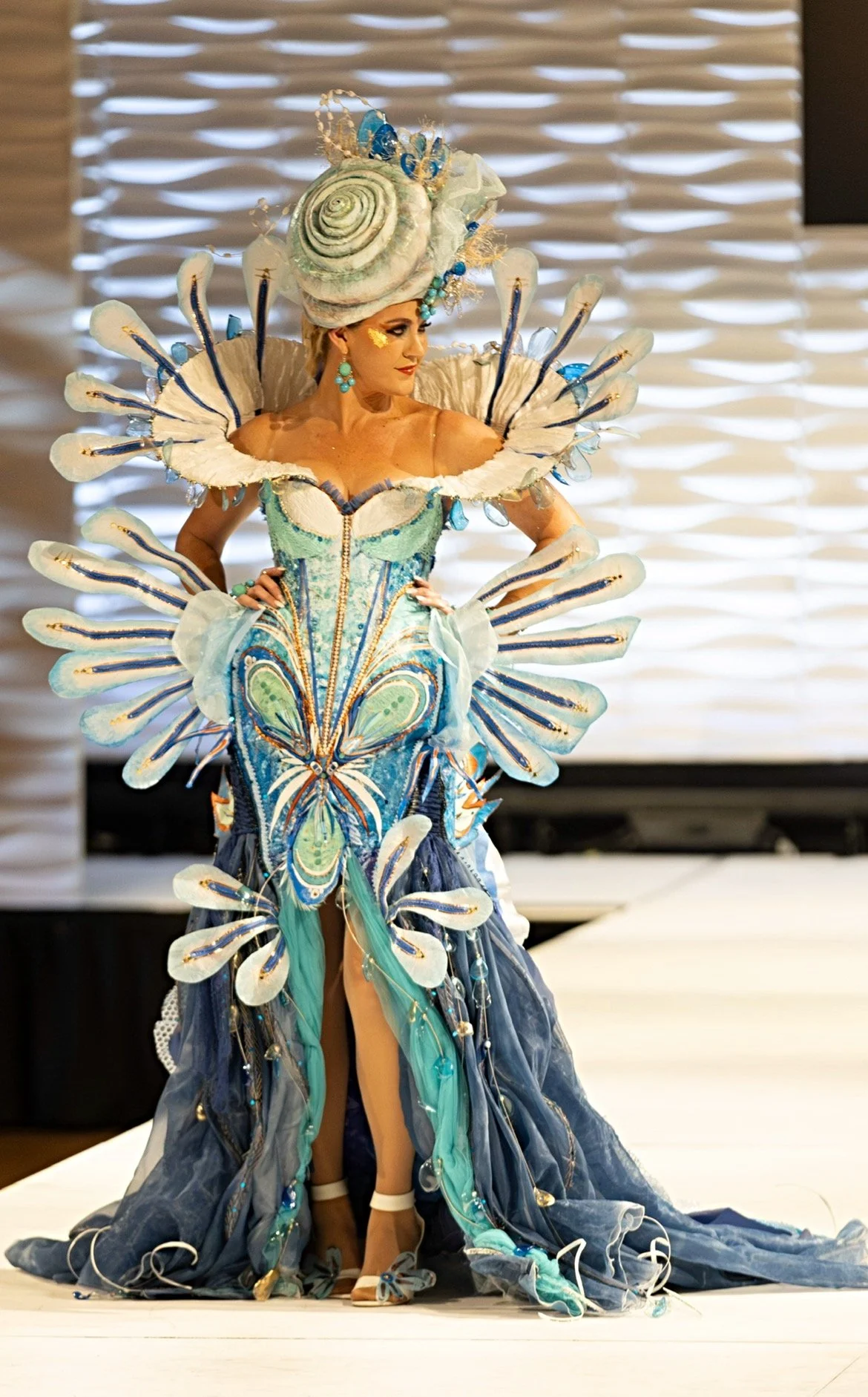
SD: Hi, Britt. Can you introduce yourself to my readers who don’t know you yet?
BT: I’d love to. My name is Britt Timmins, and I’m a sculptor, sewist and wearable artist based in Lake Macquarie, NSW. By day I work in state government, and by night my creative practice comes to life, woven in between the rhythm of a full, happy and often hectic home life. At this point, I consider myself a bit of a professional juggler.
Art has always been a constant for me, but wearable art in particular allows me to bring together everything I love, storytelling, theatrics, fashion and emotion, in a way that feels immersive and alive. I’m drawn to creating pieces that sit somewhere between fashion and sculpture with meaning and purpose. In a space where rules don’t apply and the boundaries are meant to be pushed.
SD: How and when did you get into wearable art?
BT: Well it’s been a journey and certainly not where I thought my passions would take me, but I’m so glad it found me.
I’ve loved fashion and art for as long as I can remember. The women in my life were my first and greatest influences, not just in terms of style, but in how they approached creativity.
My grandmother was incredible with a crochet hook, my great-aunt was a beautiful and very talented seamstress, and my mum brings a natural artistic flair to everything she touches. They all had this effortless sense of style, always put together, but never driven by trends or big spending. They treated getting dressed as a form of expression, working with what they had or what they could make, rather than buying into overconsumption. That mindset stayed with me.
I started creating clothing around the age of 12, mostly costumes for stage, very scrappy beginnings involving a lot of glue and staples! I didn’t learn to sew efficiently until I was about 20, when I decided it was time to do it “properly” and began studying fashion. I fell in love with evening wear and the artistry and construction behind it.
like many people though, life shifted. After having my first child, I put my creative ambitions on hold to focus on stability and providing for my family. For a long time, I barely touched a sewing machine, though I would still paint here and there just to keep that creative part of myself alive.
It wasn’t until COVID that everything changed. That pause gave me time to reflect, and I became aware of how much fast fashion we were consuming, and how much of it was just sitting there, unworn and unnecessary. Instead of discarding it, I started upcycling pieces I already had, and something clicked.
There was a freedom in it that I hadn’t experienced before. No rules, no pressure to be perfect, just creating something new from what already existed, and a place where the Imperfections helped tell its story. It felt like solving a puzzle, figuring out how to transform one thing into another, and that challenge completely drew me in.
That curiosity quickly grew into experimenting with more unconventional materials, things that were destined for landfill. I created my first “trashion” piece using plastic waste, chip packets and lolly wrappers for a local exhibition, and from that moment, I was hooked.
Wearable art felt like the natural evolution of everything I loved, fashion, art, storytelling and sustainability, all coming together in one space.
SD: What advice would you give to a younger version of yourself when you were starting out in wearable art?
BT: I’d tell myself not to wait until everything feels perfect or, you are better, or when the timing is right. Just start! and trust that the clarity comes through doing.
I had a lot of early success and recognition when I started in my early twenties, but I always doubted my abilities which really held me back from giving it a real go.
In the beginning, it’s so easy to overthink ideas or compare yourself to other artists, but some of the most interesting work comes from experimentation, from trying things that might not work and following that curiosity anyway. It’s about your voice and having something to say, don’t wait, just say it!
I’d also remind myself that not everything has to be traditionally beautiful or perfect to be powerful. Some of the pieces that feel a little raw, unbalanced or unexpected are often the ones that say the most and connect the deepest.
And practically: use what you have! I have found that limitations can actually be a gift. You don’t need to spend thousands on supplies, if you look around you they are already there. Instead of expensive boning and sculpture mediums I’ve used cable ties and gap filler with equally impressive results.
Working with unconventional or second-hand materials forces you to think differently, experiment and problem solve harder, and that’s where your unique style really starts to emerge.
Most importantly, I’d say: stay connected to why you’re creating in the first place. If your work is grounded in something meaningful to you, it will always have strength and authenticity.
SD: What keeps you inspired?
BT: Lived experiences and nature are a constant source of inspiration for me, but not just in the obvious, “pretty” sense. I’m really drawn to contrast and tension: growth and decay, strength and fragility, the way something can be both beautiful and destructive at the same time.
Living where I do, I’m surrounded by that meeting point between land and water, and I find myself constantly observing how those environments interact. How they shape each other, resist each other, and sometimes overwhelm each other. That quiet push and pull finds its way into my work.
I’m also deeply inspired by materials themselves. I love looking at something that’s been discarded or overlooked and imagining what it could become. There’s something really exciting about giving new life to objects that have already had a story, and letting that history influence the final piece.
And honestly, inspiration often comes from the process itself. Once I start creating, new ideas tend to reveal themselves. It’s less about waiting for inspiration to arrive, and more about staying open and curious enough to notice it when it does.
SD: Explain your understanding of sustainable fashion practices and how you incorporate them into your design process.
BT: For me, sustainable fashion goes far beyond just choosing “eco-friendly” materials, it’s a mindset and a way of approaching creation more consciously. It’s about questioning how and why we make things, and considering the full lifecycle of a piece rather than just its end result.
A big part of my process is working with what already exists. I prioritise second-hand, discarded and found materials, clothing, linen, offcuts, plastics, natural fibres, anything that might otherwise be overlooked or sent to landfill. I rarely purchase new materials, because I’m really interested in the challenge and creativity that comes from reimagining something that already has a history.
I’m also very mindful about waste within my own process. I keep everything! even the smallest scraps, and often reintroduce them into future pieces. Many of my works actually carry elements from previous creations embedded within them, which creates a kind of continuity and layered storytelling across my practice. Nothing is ever really thrown away; it just evolves.
Conceptually, it’s also embedded in the stories I tell. My work often reflects environmental tension and human impact, not in an overt or didactic way, but in a way that invites people to feel and reflect.
Ultimately, sustainable practice for me is about slowing down, being resourceful, and creating with intention, proving that innovation and beauty don’t have to come at the cost of the environment.
SD: You’re a 2026 finalist in The Australian Wearable Art Festival. What excites you most about this?
BT: It’s incredibly exciting and really special to be returning as a finalist for a second time, after also being selected in 2024. After AWAF in 2024, I pushed myself so hard that I needed to take a mental and creative pause. But after that rest, I couldn’t help but feel drawn back to it, so I entered again for 2026, and I’m so honoured to be accepted as a finalist! There’s something really affirming about coming back, not just with a new piece, but with growth, fresh ideas and a deeper understanding of my own practice.
What excites me most is being part of a space that truly celebrates experimentation and boundary-pushing work. I find wearable art can often be quite a solitary process, and very few people in my life (although incredibly supportive) really understand it. so bringing it into a shared environment with other artists who are equally passionate and innovative is wonderfully energising.
I also love that this platform allows the work to be experienced as it’s meant to be, in motion, on the body, telling a story in real time. Seeing how audiences connect with a piece, with what they notice and what they feel, is such a powerful part of the process.
Beyond that, it’s simply an honour. To be recognised alongside such a diverse and talented group of artists, for a second time, feels both humbling and motivating. It really encourages me to keep pushing my ideas further.
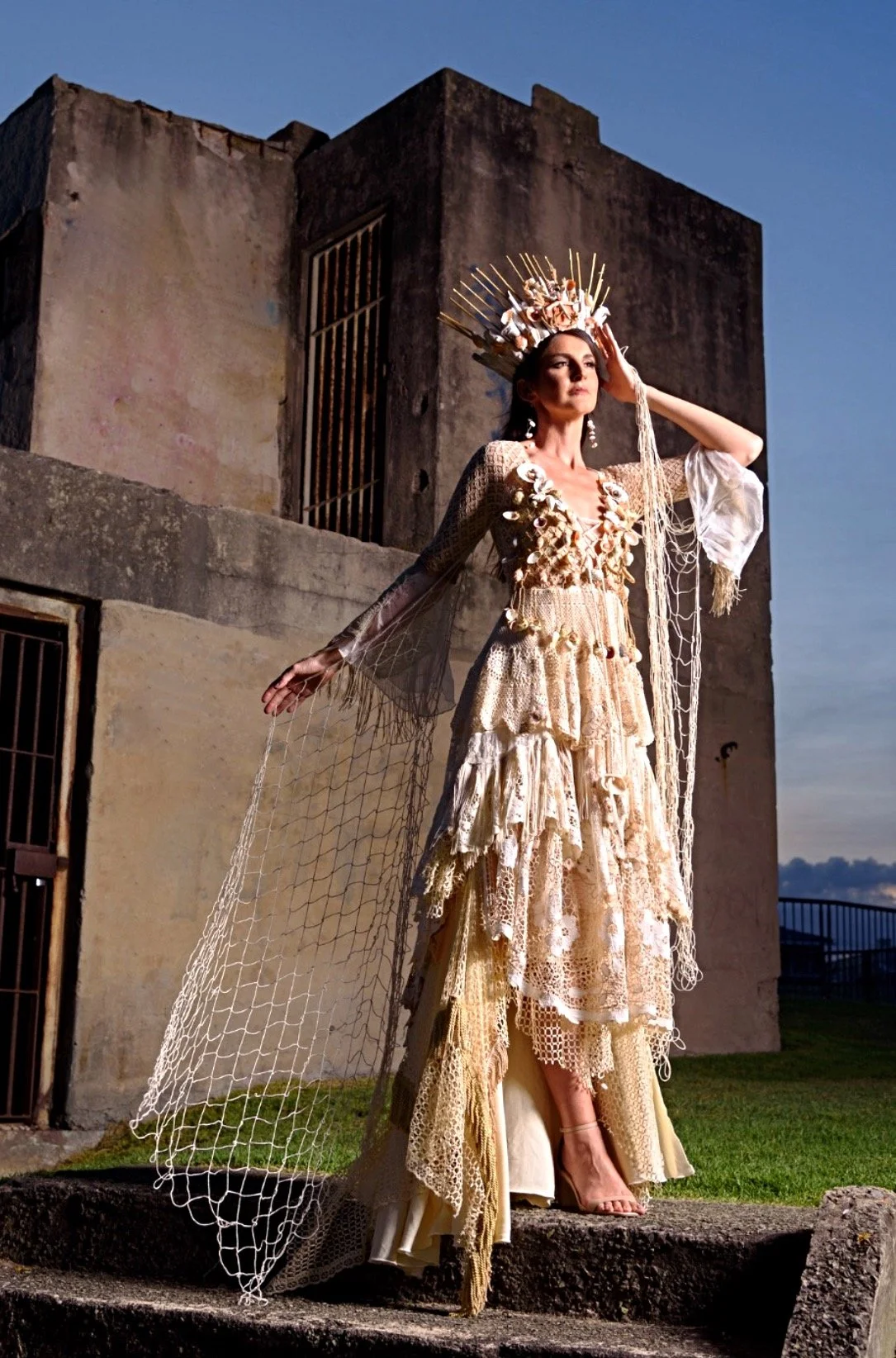
Tickets are going fast. Go and buy tickets to see Britt Timmins in The Australian Wearable Art Festival here
The Australian Wearable Art Festival Website: https://australianwearableart.com.au/
The Australian Wearable Art Festival Instagram: https://www.instagram.com/australianwearableart/
The Australian Wearable Art Festival Facebook: https://www.facebook.com/australianwearableart/
Britt Timmins:
Instagram: https://www.instagram.com/sailorswayze_artist
Facebook:https://www.facebook.com/profile.php?id=100065260832527
Photo Credits:
First Photo: “Toxic Tango” taken by Barry Alsop and modelled by Carly Rudd
Second Photo: “Drifter” taken by Warren Marshall and modelled by Roxanne O’Dea